
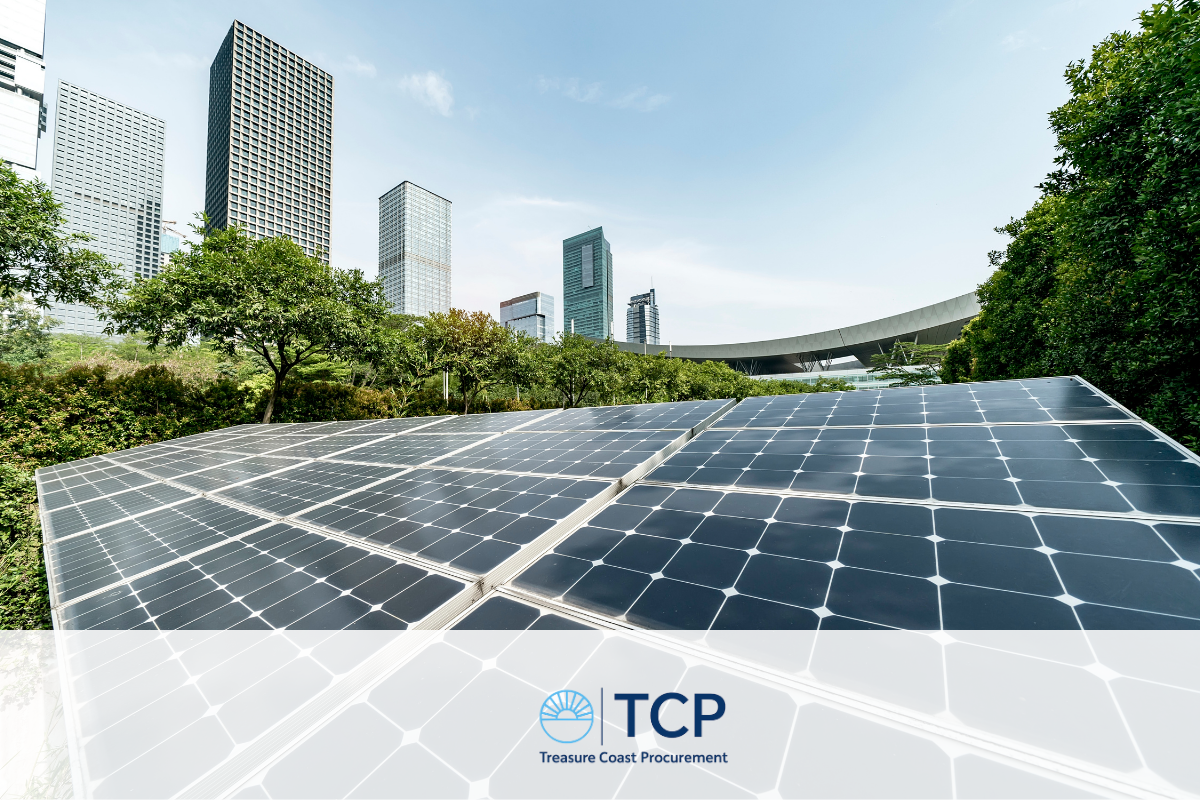
The solar industry has experienced significant growth over the past decade as developers, EPC firms, utilities, and renewable energy investors continue expanding utility-scale and commercial solar projects across the United States.
As projects become larger and more complex, procurement has become one of the most important functions within solar development and operations.
From sourcing solar modules and electrical equipment to managing supplier relationships and navigating global supply chain disruptions, solar companies face increasing pressure to control costs, reduce procurement risk, and keep projects on schedule.
At Treasure Coast Procurement (TCP), we provide procurement consulting and strategic sourcing services for solar companies looking to improve procurement visibility, optimize supplier relationships, reduce vendor costs, and strengthen supply chain performance across solar projects and operational activities.
Why Procurement Matters for Solar Companies
Procurement directly impacts nearly every stage of a solar project.
Equipment pricing, supplier lead times, transportation delays, and contract structures all influence project profitability and execution timelines.
As the solar market continues to evolve, procurement teams are being asked to manage:
- Material pricing volatility
- Long equipment lead times
- Global supply chain disruptions
- Vendor performance
- Logistics coordination
- Supplier diversification
- Contract negotiations
- Inventory forecasting
- EPC procurement coordination
Without a strategic procurement process, solar companies often experience project delays, inconsistent pricing, and operational inefficiencies that impact margins and overall project success.
Procurement Challenges in the Solar Industry
Solar companies operate in a fast-moving environment where procurement decisions must align closely with construction schedules, engineering requirements, and financing timelines.
Solar Module Supply Chain Volatility
Solar module pricing and availability can fluctuate significantly due to:
- International trade policies
- Manufacturing capacity
- Material shortages
- Shipping disruptions
- Tariffs and import regulations
- Global demand shifts
Strategic procurement planning helps solar companies improve visibility into supplier markets and reduce exposure to supply chain risk.
Long Lead Times for Critical Equipment
Many critical solar project components require extended manufacturing and shipping timelines.
This includes:
- Solar modules
- Inverters
- Transformers
- Switchgear
- Battery storage systems
- Electrical infrastructure equipment
Procurement forecasting and supplier coordination become essential to maintaining project schedules.
Decentralized Purchasing
As solar companies grow across multiple projects or regions, procurement activity often becomes fragmented between project managers, EPC teams, operations groups, and field personnel.
This can lead to:
- Inconsistent supplier pricing
- Duplicate vendors
- Reduced negotiating leverage
- Limited spend visibility
- Inefficient procurement workflows
Procurement consulting services help solar companies centralize procurement strategies and improve purchasing consistency across projects.
Strategic Sourcing for Solar Companies
Strategic sourcing focuses on improving supplier relationships, increasing procurement visibility, and reducing procurement costs through structured sourcing initiatives.
Procurement Categories for Solar Projects
Solar procurement extends far beyond module sourcing.
Strategic sourcing initiatives often include:
- Solar panels and modules
- Inverters
- Battery energy storage systems
- Transformers
- Electrical equipment
- Structural steel and racking systems
- Cable and wire
- SCADA and monitoring systems
- Construction materials
- Fleet and transportation
- Equipment rentals
- Temporary labor
- Logistics and freight
- Engineering and consulting services
Without a structured sourcing strategy, pricing inconsistencies and supplier inefficiencies can significantly impact project budgets.
Competitive Bidding and Supplier Benchmarking
Procurement consulting services help solar companies improve procurement transparency through competitive bidding and supplier benchmarking processes.
Request for Proposal (RFP) Management
Structured RFP processes help organizations evaluate suppliers based on:
- Pricing
- Delivery timelines
- Manufacturing capacity
- Warranty structures
- Technical capabilities
- Financial stability
- Service and support
Competitive sourcing improves pricing transparency while strengthening supplier accountability.
Supplier Benchmarking
Benchmarking supplier pricing against current market conditions helps solar companies determine whether existing pricing structures remain competitive.
Benchmarking often uncovers opportunities for:
- Contract renegotiation
- Vendor consolidation
- Improved payment terms
- Better service agreements
Procurement Risk Management for Solar Companies
Supply chain disruptions remain one of the largest risks in the solar industry.
Strategic procurement services help organizations strengthen supply chain resilience and reduce operational exposure.
Supplier Diversification
Overreliance on a single supplier can create significant project risk.
Procurement consultants help solar companies evaluate:
- Alternative suppliers
- Manufacturing capacity
- Geographic risk exposure
- Vendor financial stability
- Supplier delivery history
- Production scalability
Diversified supplier networks help reduce delays and improve procurement flexibility.
Procurement Forecasting
Forecasting material requirements earlier in the project lifecycle allows solar companies to secure production capacity before market demand impacts lead times and pricing.
This is especially important for utility-scale solar developments where procurement delays can affect construction sequencing and commissioning schedules.
Spend Analysis and Procurement Visibility
Many solar companies lack centralized visibility into procurement spend across projects and business units.
Procurement consulting services help organizations organize and analyze supplier data to improve strategic decision-making.
Spend Segmentation
Spend analysis helps identify:
- High-spend procurement categories
- Redundant vendors
- Supplier concentration
- Cost-saving opportunities
- Procurement inefficiencies
- Contract exposure
Improved spend visibility creates stronger sourcing leverage and better financial oversight.
Procurement Benchmarking for Solar Companies
Benchmarking procurement activity across projects helps solar companies standardize pricing expectations and improve supplier negotiations.
This process often identifies opportunities for operational savings across both project procurement and ongoing maintenance operations.
Procurement Services for Utility-Scale Solar Projects
Utility-scale solar projects require highly coordinated procurement strategies involving multiple suppliers, contractors, and stakeholders.
Procurement Support During Solar Development
Procurement consulting services often include:
Supplier Prequalification
Evaluating vendor capabilities and production capacity before award.
Contract Negotiation
Reviewing commercial terms, warranties, escalation clauses, and delivery schedules.
Procurement Scheduling
Aligning procurement timelines with engineering and construction milestones.
Vendor Coordination
Improving communication between suppliers, EPC firms, engineering teams, and project management groups.
Structured procurement planning helps reduce project risk and improve execution efficiency.
Procurement Services for Solar Operations and Maintenance
Procurement continues long after project construction is complete.
Solar operations teams rely on procurement support to maintain long-term asset performance and operational reliability.
Ongoing Procurement Categories
Operations and maintenance procurement often includes:
- Replacement parts
- Electrical components
- Maintenance supplies
- Monitoring systems
- Safety equipment
- Fleet management
- Service agreements
- Industrial supplies
Without procurement oversight, operational costs can increase significantly over time.
How Procurement Improves EBITDA for Solar Companies
Procurement directly impacts project profitability and operating margins.
Strategic sourcing initiatives help solar companies improve EBITDA through:
- Lower supplier pricing
- Better contract structures
- Reduced logistics costs
- Vendor consolidation
- Improved inventory planning
- Reduced procurement inefficiencies
For solar developers, utilities, and renewable energy investors, procurement optimization can create meaningful financial improvements across multiple projects and operational assets.
Why Solar Companies Partner With Procurement Consultants
Many solar companies partner with procurement consultants because internal teams are focused heavily on engineering, development, project execution, and operational management.
Procurement consultants provide specialized support in:
- Strategic sourcing
- Supplier negotiations
- Spend analysis
- Procurement benchmarking
- Contract review
- Vendor management
- Procurement process development
This allows project teams to remain focused on execution while procurement initiatives are managed strategically.
Final Thoughts
As the solar industry continues to expand, procurement has become a critical function that directly influences project execution, operational efficiency, and financial performance.
Solar companies face increasing pressure to manage supply chains strategically while controlling costs, improving supplier accountability, and reducing procurement risk.
Strategic procurement services help solar organizations improve sourcing visibility, strengthen supplier relationships, optimize procurement processes, and identify measurable savings opportunities across both capital projects and operational activities.
At Treasure Coast Procurement (TCP), we help solar companies improve procurement performance through strategic sourcing, supplier benchmarking, spend analysis, and procurement process development designed to support long-term operational growth and successful project execution.